Tom Peters has discussed some interesting topics this week. Is "Passion" Optional was especially interesting.
To become the best of the best requires a strong desire to be extraordinary. In sales and service, that desire must come from the frontline team leader. However, it is rare because it is easier to just go through the motions and not bother with analyzing or altering the current leadership model, management system, and team achievement expectations.
Excellence is uncommon in sales and service because, in most cases, it is just blind luck when someone learns how to attract, or develop, energize, and excite a staff of frontline personnel. Companies don't teach motivation, mindset, and mission skills to frontline managers. So how does a person have a passion to be a great team leader without a system that personnel buy into without a purpose, a plan, and a system that accomplishes the purpose?
They don't.
A person is passionate about achieving great goals only after they know how to achieve them.
Like everything in life, most of us are doing the best we can with what we know at the time. Almost anyone-arrogant jerks have difficulty-can be a extraordinary leader when they know how to set high standards that everyone buys into. And then provides the daily education, motivation, and appreciation that inspires them to get involved, improve, and achieve beyond all previous expectations.
Friday, August 04, 2006


Wednesday, August 02, 2006
PML - Performance Management Leadership
Well, I guess the message is finally getting out there. The good news is that this article puts a name on much of what OneByOne Team Achievement does. But the bad news (kinda bad) is that the discussion in this article is considered new news. Not all that bad because I now know the market is going to be really excited when I start marketing.
I have a hard time understanding that common sense about motivating people to give it their best, is not very common at all. When I read the the six dimensions listed below, my immediate reaction was "well, duh!"
Then I re-read the article again and realized, for the first time, that there are a lot of people that just don't know how to get people excited about excellence, or probably much of anything else. They don't know how to create a mission, or cause, to become the best of the best.
When I talk about performance management leadership, I describe it as the blocking and tackling of leadership," he says. "It's all about leadership that helps organizations to execute. It's the basic things that help leaders to be successful." The six dimensions of PML, and their definitions, are:
Support and coaching: The extent to which a leader instructs, directs and promotes employee effectiveness. This dimension includes such factors as providing employees with adequate resources, serving as a role model and providing guidance.
Communication: An "essential core competency for a successful leader," this dimension includes approachability and the ability to offer positive feedback.
Providing consequences: The extent to which a leader acknowledges employee performance through recognition and rewards.
Feedback: A measure of the quantity, quality and timeliness of performance information a leader passes onto his employees.
Process of goal setting: A measure of how well a leader establishes developmental and performance goals linked to the organization's goals.
Establishing/monitoring performance expectations: The extent to which a manager keeps track of how well an employee is meeting the aforementioned goals.
"PML is about executing on a daily basis -- where the rubber meets the road," Kinicki says. "That's what I'm talking about."
Tuesday, August 01, 2006
Make the Manager the Team Leader
Reaching and Changing Frontline Employees
Larkin, T.J., & Larkin, S. (1996). Harvard Business Review.
It is argued that senior managers - and most communication consultants - have refused to hear what frontline workers have been trying to tell them: When you need to communicate a major change, stop communicating values, communicate face-to-face, and spend most of your time, money and effort on frontline supervisors. Despite research showing that frontline employees prefer to receive information from their supervisor - the person to whom they are closest - companies continue to depend on charismatic executives to inspire the troops. This does not work because frontline supervisors are the real opinion leaders in any company. Communication between frontline supervisors and employees counts the most toward changed behavior where it matters the most - at the front line
The above statement is from a great article that I recommend potential achievers, who sincerely want to be leaders, purchase if they don't already understand employees want to be lead by their immediate supervisor, not the Ivory Tower of Corporate Guessing that more often seems to be justifying their position (and paycheck) than striving to create and maintain a happy motivated workforce.
ninety percent of leadership and management is common sense. The problem of course, is that common sense not common. Nor is it taught to leaders and managers because people have this aversion to starting with the basics of human behavior and then ending with the teachings of the Golden Rule.
It's just people you are trying to energize. Treat them right and they will treat you right.
Buy a copy of The Enthusiastic Employee: How Companies Profit by Giving Workers What They Want and learn the basics of how to communicate with employees and inspire them to improve themselves, their team, and their company.
Poor Leadership = Mystery Shoppers
"Customer service is something that's integral at Eddie Bauer. ... The customers expect it from us," says Lisa Erickson, a spokeswoman at the Seattle-based clothier.
To that end, mystery shoppers hired by an outside vendor visit every one of Eddie Bauer's 380 stores three times each month, she says.
"It is a data point that the store leadership team can use to see how consistent the customer experience is," Erickson says. Feedback is received almost immediately and shared among managers, though no salespeople's names are attached to the reports, she says.Mystery Shoppers are a great concept for poorly lead and managed companies.
This is a great article on the value to employers and the fun of being a hired spy.
They need these spies-probably more to scare staff into good service habits than for information on service skills-because they have yet to learn how to develop and retain great frontline managers. They have yet to understand the value of a great frontline manager who can get a team focused on sales and service excellence.
A great team focused on winning the Sales Game or the Customer Service game has their own way of making certain customers are highly satisfied. And it doesn't need the corporate office, spies, or surveys.
Monday, July 31, 2006
Seattle Mariners Finally Have Team Chemistry
Here comes the M's. They have become team both focused on the prize and doing what they have to earn it. They finally have all the ingredients of a highly successful team. Leadership, talent, teamwork, training, and TEAM CHEMISTRY.
I am not certain it was Mike Hargrove, but knowing what it take to create a great sports team is not a mystery. The goal of every team is team chemistry. As college and pro teams prepare for the imminent football season, they are all working on their team chemistry.
I love watching Mariner games as the camera focus on the "bench" and dugout where you see players having fun (it is a game, games are fun) and talking each other about how to improve their skills. I especially enjoy watching veterans help the younger players.
It is all driven by the desire to win their Division, the American League West, and the knowledge that EVERYONE must contribute in order for them to win it. Team goals drive individual goals to improve and excel.
In team sports, team chemistry is the key to winning the "Best of the Best Trophy." Just as it is with a sales or customer service team.
Imagine the value of experienced personnel helping their peers improve their sales, service, and team skills. Imagine the vaslue of everyone talking about sales and service excellence every day, day after day, one by one.
Imagine the value of an entire team of frontline personnel who enjoy working together, helping each other, and providing a customer experience that inspires them to remember, return, and recommend.
According to the Seattle Post-Intelligencer, Mike Hargrove, the team LeaderManager said, "Things are going good for us right now," Hargrove said. "Players know what they have to do, and they're doing it.He is right, it took awhile for someone to teach it.
"If somebody sees a guy goof up, the veteran guys are pulling them aside and telling them what to do. It's the kind of thing winning clubs do, and it took us a while to learn it."
I am not certain it was Mike Hargrove, but knowing what it take to create a great sports team is not a mystery. The goal of every team is team chemistry. As college and pro teams prepare for the imminent football season, they are all working on their team chemistry.
I love watching Mariner games as the camera focus on the "bench" and dugout where you see players having fun (it is a game, games are fun) and talking each other about how to improve their skills. I especially enjoy watching veterans help the younger players.
It is all driven by the desire to win their Division, the American League West, and the knowledge that EVERYONE must contribute in order for them to win it. Team goals drive individual goals to improve and excel.
In team sports, team chemistry is the key to winning the "Best of the Best Trophy." Just as it is with a sales or customer service team.
Imagine the value of experienced personnel helping their peers improve their sales, service, and team skills. Imagine the vaslue of everyone talking about sales and service excellence every day, day after day, one by one.
Imagine the value of an entire team of frontline personnel who enjoy working together, helping each other, and providing a customer experience that inspires them to remember, return, and recommend.
Friday, July 21, 2006
Even The US Postal Service Doesn't Train Managers
As I read this article about the latest postmaster at the Apple Valley post office, I think about my current problems with the downtown Seattle post office which are too frustrating to waste time mentioning.
Leadership makes the difference in performance, yet few organizations see the value in investing in management training or having a successful management system in place at all locations.
Petras and other employees at the Apple Valley post office say it’s no secret that the town’s postal delivery service has been lackluster over the past few years, plagued with late deliveries and high employee turnover. But Petras — who started in January but was sworn in Tuesday— said changes are coming.
Apple Valley postal workers couldn’t put a precise number on management’s turnover rate the past few years, but they offered a guess.“It’d take me a while to count ’em,” said Dave Schloer, a postal worker and vice president of the local postal union. “Definitely in the dozens.”
In the dozens!!!
Just as most new frontline sales and customer service leaders receive minimal training-if any-before their first leading and managing opportunity, the government doesn't see the need for a leadertship model and a management system in the nation's post offices.
“I think it was just a lack of communication,” Petras said. “And a matter of putting some new rules in place.”
The postal service finally got lucky and stumbled across somebody to stop the waste of taxpayers dollars, but how long will this last? With leadership that allowed continual management the turnover to exist, what will they do next? If Mr. Petras is truly effiecient, do they cut the size of his staff?
I wonder how many frontline staff were blamed, through the years, for poor performance by their underperforming (untrained) postmasters? How many had a miserable employment experience? Day after day...
Leadership makes the difference in performance, yet few organizations see the value in investing in management training or having a successful management system in place at all locations.
Petras and other employees at the Apple Valley post office say it’s no secret that the town’s postal delivery service has been lackluster over the past few years, plagued with late deliveries and high employee turnover. But Petras — who started in January but was sworn in Tuesday— said changes are coming.
Apple Valley postal workers couldn’t put a precise number on management’s turnover rate the past few years, but they offered a guess.“It’d take me a while to count ’em,” said Dave Schloer, a postal worker and vice president of the local postal union. “Definitely in the dozens.”
In the dozens!!!
Just as most new frontline sales and customer service leaders receive minimal training-if any-before their first leading and managing opportunity, the government doesn't see the need for a leadertship model and a management system in the nation's post offices.
“I think it was just a lack of communication,” Petras said. “And a matter of putting some new rules in place.”
The postal service finally got lucky and stumbled across somebody to stop the waste of taxpayers dollars, but how long will this last? With leadership that allowed continual management the turnover to exist, what will they do next? If Mr. Petras is truly effiecient, do they cut the size of his staff?
I wonder how many frontline staff were blamed, through the years, for poor performance by their underperforming (untrained) postmasters? How many had a miserable employment experience? Day after day...
Monday, July 17, 2006
Bloggers, Help Groups, Consultants, etc: Thanks!
As I spent the weekend pondering exactly what to cover (and somehow survive my addiction to perfection) as I get back to posting on this blog, I read the sage words of Alan Alda I have framed on my office wall. "You have leave the city of your comfort and go into the wilderness of your intuition. You can’t get there by bus, only by hard work and risk and by not quite knowing what you are doing.”
I have never understood the bus part, but hard work, risk, and not quite knowing what I am doing is definitely applicable to this blog. His words make it ok to be wrong, which is music to the ears of a perfectionist.
I have finally decided what to do in a number of areas, but can't seem to solve the spamming in my of my "comments" that continues to happen every few days. (I have sought information in help groups, but no replies so far.)
I have to thank all of the people who are so effective in their efforts to help blog novices go through a rapid learning curve. They are too numerous to mention, but they are heaven-sent and greatly apprecated.
I am still trying to decide if I want to stay with blogger or go to typepad, but in the meantime I'll get back to consistent posting about sales, service, and team leadership excellence.
I have never understood the bus part, but hard work, risk, and not quite knowing what I am doing is definitely applicable to this blog. His words make it ok to be wrong, which is music to the ears of a perfectionist.
I have finally decided what to do in a number of areas, but can't seem to solve the spamming in my of my "comments" that continues to happen every few days. (I have sought information in help groups, but no replies so far.)
I have to thank all of the people who are so effective in their efforts to help blog novices go through a rapid learning curve. They are too numerous to mention, but they are heaven-sent and greatly apprecated.
I am still trying to decide if I want to stay with blogger or go to typepad, but in the meantime I'll get back to consistent posting about sales, service, and team leadership excellence.
Monday, July 03, 2006
Exceptional Service = Exceptional Profits
This short article, Service is what keeps customers coming back for more, is spot on.
Provide exceptional customer service consistently and before long you will have a highly profitable reputation for great service. It's been that way for decades.
Jeffrey Gitomer says it well, "The bottom line is this: The products at department stores are about the same. The difference is the people, the service and the technology, not new signs and shelves. Create the atmosphere, and every employee will begin to hear ringing in their ears-the ringing of cash registers."
Provide exceptional customer service consistently and before long you will have a highly profitable reputation for great service. It's been that way for decades.
Jeffrey Gitomer says it well, "The bottom line is this: The products at department stores are about the same. The difference is the people, the service and the technology, not new signs and shelves. Create the atmosphere, and every employee will begin to hear ringing in their ears-the ringing of cash registers."
Saturday, July 01, 2006
Achieve: Ask - Listen - Learn - Believe - Act
I want to do things right on this blog. Asking questions begins that process. Anyone who has any comments about what this blog needs should feel free to speak up. I love criticism, suggestions, ideas, or anything else that would improve what I want to do here.
And that is...motivate businesses selling and serving products and services to the general public to get their act together. Specifically businesses that appear to be trying to be one of the best, but just don't get it. Multi-location companies that try to have a team-focused, excellence-driven, "something special" culture, yet they fail to deliver because when their customers judge, consciously and unconsciously, everything the see, hear, smell, and "feel" when they enter their selling or serving environments, things aren't held to high standards.
I love the thrill of an exceptional customer service experience. It doesn't happen often, but It is so much fun being sold and/or served by friendly, excited, enthusiastic, and energetic sales and customer service personnel.
The problem with the leadership and management of many sales and customer service teams is that they don't believe they have a problem with their employees, sales, or service.
And that is...motivate businesses selling and serving products and services to the general public to get their act together. Specifically businesses that appear to be trying to be one of the best, but just don't get it. Multi-location companies that try to have a team-focused, excellence-driven, "something special" culture, yet they fail to deliver because when their customers judge, consciously and unconsciously, everything the see, hear, smell, and "feel" when they enter their selling or serving environments, things aren't held to high standards.
I love the thrill of an exceptional customer service experience. It doesn't happen often, but It is so much fun being sold and/or served by friendly, excited, enthusiastic, and energetic sales and customer service personnel.
The problem with the leadership and management of many sales and customer service teams is that they don't believe they have a problem with their employees, sales, or service.
Friday, June 30, 2006
More Truths About Employee Turnover
F. Leigh Branham wrote a short and to the point article, published in the American Management Association newsletter, that covers the subject well on one piece of paper which, of course, is extremely refreshing. The article covers six truths about employee turnover.
Truth No. 5 spoke to core of the situation, but not the core of the problem.
Truth No. 5: Managers Hold Most of the Keys to Keeping the Right TalentOne recent study showed that 50 percent of the typical employee’s job satisfaction is determined by the quality of his/her relationship with the manager. Many companies are floundering today in their attempts to improve employee retention because they have placed the responsibility for it in the hands of human resources instead of the managers. Many companies have begun to measure managers’ turnover rates and vary the size of their annual bonuses accordingly.
It just makes sense that the quality of the day-to-day interaction between managers and employees is important to both parties.
But the problem is that it is a culture problem. Companies that allow poor management are most often culturally corrupt. They say they stand for wonderful things. Perfect in all ways, but allowing bad management means you are also allowing favoritism, nepotism, egotism, celebrity and good ol' boy networks.
Truth No. 5 spoke to core of the situation, but not the core of the problem.
Truth No. 5: Managers Hold Most of the Keys to Keeping the Right TalentOne recent study showed that 50 percent of the typical employee’s job satisfaction is determined by the quality of his/her relationship with the manager. Many companies are floundering today in their attempts to improve employee retention because they have placed the responsibility for it in the hands of human resources instead of the managers. Many companies have begun to measure managers’ turnover rates and vary the size of their annual bonuses accordingly.
It just makes sense that the quality of the day-to-day interaction between managers and employees is important to both parties.
But the problem is that it is a culture problem. Companies that allow poor management are most often culturally corrupt. They say they stand for wonderful things. Perfect in all ways, but allowing bad management means you are also allowing favoritism, nepotism, egotism, celebrity and good ol' boy networks.
Turnover? Make It An Extraordinary Experience
This article tells a story about a restaurant owner with BIG problems that could be solved by doing one thing.
Attract, or develop, an entire team of frontline personnel focused on customer service excellence.
Create, energize, and retain an entire team of front-line employees that make such a satisfying impression on customers that they are inspired to remember the experience, return frequently for more, and make a point to enthusiastically recommend the experience to others.
If you don't know how to do that, find someone who can teach you how to do it. A book about creating a great team is yet to be written.
Attract, or develop, an entire team of frontline personnel focused on customer service excellence.
Create, energize, and retain an entire team of front-line employees that make such a satisfying impression on customers that they are inspired to remember the experience, return frequently for more, and make a point to enthusiastically recommend the experience to others.
If you don't know how to do that, find someone who can teach you how to do it. A book about creating a great team is yet to be written.
Thursday, June 29, 2006
US Army Basic Training: A Learning Experience
Well, as I have told many people, one of the things I want to talk about is those opportunities to improve ourselves through "learning experiences" that change our lives.
This is how I learned about the value of learning. And realized that becoming the best of the best was nothing more than having the desire and energy to learn how to become the best of the best.
By the time I entered the work force, I knew I wanted to manage and lead people. It had cost me time and money to learn, but I was ready at age twenty-eight. Because I was terrified to speak to groups, after six years in college I still hadn't completed Speech 101. Seven times i had dropped out of the class. So I volunteered for the draft and after a week in Basic Training I knew I was going to learn how to be a leader. Despite my begging to, as I had done all my life, just blend in, the Drill Sargeant made me the Platoon Guide (Platoon: 48 soldiers). I was the oldest, biggest, and, while he didn't tell me, he knew it was time for me to grow up.
A week later, the day I grew up, I was calling out commands, marching all over the place, and listening to every word that came out of Sargeant McClellan's mouth. He told me he was going to tell me how to become a leader and he did. After years of playing sports, including four years of college football (Pacific Lutheran University), I finally had a mentor that who interested in helping me determine what I was going to do with my life.
Actually he was the first person I truly, truly listened to when they tried to help me. My parents were educators so I got a lot of advice. But, of course, I knew it all. I had been the Principals kid in a small logging and farming town, so I had to resist learning or get my butt kicked every time (seemed like everytime) my Dad disciplined someone.
Sargeant McClellan was about a foot shorter than I am, but it took me a month and a half before I realized he wasn't towering over me. He drilled into me that it's "all about being the best of the best and the only way to become the best is learn how to do it. Every day, one by one, keep learning. I'm in the Army helping idiots like me because I flunked out of high school, but until I am the best Drill Sargeant I am going to bust my butt to learn how to become one. And you, Mr. Sovde, are going to learn how to be the best Platoon Guide (of 5 platoons). We are going to be the top platoon and we can't do it without you being the best."
We were number one, he was number one, and the learning experience was number one.
After two years in the Army, I went back to Pacific Lutheran for a year to complete the speech course (it was painful-learning how to speak came later) and raise my GPA so I could get into Law School. I took a heavy load and made the Deans List with a 4.0 GPA.
My teachers, parents, and friends were somewhat surprised, to say the very least. If they had met my Drill instructor, my first mentor, they would have expected nothing less.
He was an awesome individual. I am so fortunate I met him.
He's right. The best of the best is what it's all about. Doing it right is what that's all about.
This is how I learned about the value of learning. And realized that becoming the best of the best was nothing more than having the desire and energy to learn how to become the best of the best.
By the time I entered the work force, I knew I wanted to manage and lead people. It had cost me time and money to learn, but I was ready at age twenty-eight. Because I was terrified to speak to groups, after six years in college I still hadn't completed Speech 101. Seven times i had dropped out of the class. So I volunteered for the draft and after a week in Basic Training I knew I was going to learn how to be a leader. Despite my begging to, as I had done all my life, just blend in, the Drill Sargeant made me the Platoon Guide (Platoon: 48 soldiers). I was the oldest, biggest, and, while he didn't tell me, he knew it was time for me to grow up.
A week later, the day I grew up, I was calling out commands, marching all over the place, and listening to every word that came out of Sargeant McClellan's mouth. He told me he was going to tell me how to become a leader and he did. After years of playing sports, including four years of college football (Pacific Lutheran University), I finally had a mentor that who interested in helping me determine what I was going to do with my life.
Actually he was the first person I truly, truly listened to when they tried to help me. My parents were educators so I got a lot of advice. But, of course, I knew it all. I had been the Principals kid in a small logging and farming town, so I had to resist learning or get my butt kicked every time (seemed like everytime) my Dad disciplined someone.
Sargeant McClellan was about a foot shorter than I am, but it took me a month and a half before I realized he wasn't towering over me. He drilled into me that it's "all about being the best of the best and the only way to become the best is learn how to do it. Every day, one by one, keep learning. I'm in the Army helping idiots like me because I flunked out of high school, but until I am the best Drill Sargeant I am going to bust my butt to learn how to become one. And you, Mr. Sovde, are going to learn how to be the best Platoon Guide (of 5 platoons). We are going to be the top platoon and we can't do it without you being the best."
We were number one, he was number one, and the learning experience was number one.
After two years in the Army, I went back to Pacific Lutheran for a year to complete the speech course (it was painful-learning how to speak came later) and raise my GPA so I could get into Law School. I took a heavy load and made the Deans List with a 4.0 GPA.
My teachers, parents, and friends were somewhat surprised, to say the very least. If they had met my Drill instructor, my first mentor, they would have expected nothing less.
He was an awesome individual. I am so fortunate I met him.
He's right. The best of the best is what it's all about. Doing it right is what that's all about.
Team Excellence: Leadership and Selflessness
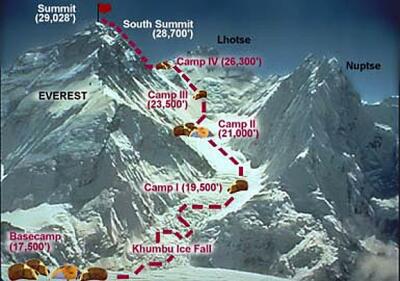 Interesting article in this weeks Knowledge at Wharton on-line newsletter. While many of the article aren't about team leadership, I recommend the weekly newsletter to anyone who enjoys reading about business excellence. I am especially fond of the school after it published my favorite book on leadership and management.
The Enthusiastic Employee: How Companies Profit By Giving Workers What They Want is a must-read (own) for anyone who wants to create a great employment experience for themselves and their employees.
Having reached the summit of Mt. Everest five times, Breashears knows what he wants in a team. Surprisingly, he's not necessarily looking for the best climbers. "I look for talented people who believe in their craft, not those who are looking for praise," he said. "The most important quality is selflessness. I knew that no matter what, no one would leave me behind," he joked.
Sharing a common goal and vision is critical, and no one's ego can take precedence. "People who say 'me first' can be dangerous on Everest." Indeed, in Breashears' experience, the teams that operate best have a higher objective than themselves. Humility makes a great leader. "The kind of leader I want wakes up and asks, 'What did I do wrong yesterday, and how can I fix it today?' Your team doesn't need to like you, but they have to trust and respect you," he said. "A leader who puts his interests first is a highly demoralizing force."
Breashear makes a number of accurate statements about teams, leadership, and character, but few businesses have the ability to create teams that "have a higher objective than themselves."
Sales, Service, Sports: Ya Gotta Believe

I love the Seattle Mariners.
They are currently one of the hottest teams in baseball because of team leadership (much to my surprise), believing in themselves, and team chemistry (character).
This excerpt, from today's Tacoma News Tribune, is from one of thousands of articles written every year about how professional sports teams succeed.
Whats gotten into the 40-39 Mariners?
Just about everything.
The chemistry is very good on this team, Hernandez said. We are all in this together the pitching, the defense, the offense. We are together, and if one guy doesn't get it done, the next guy picks him up.
We believe in ourselves, we pick each other up and that the history of this month. That why we're winning.
The same is true for frontline sales and customer service teams, yet the majority of them are still going through the motions. The concept of an entire team of top achievers-that a team must have in professional sports-gets lost in the various forms of the 80/20 Rule that justifies the lack of teams comprised of achievers. Justifies failure to create a unified team focused on being among the best of the best. if not the best!
Wednesday, June 28, 2006
Employee Surveys Hide Real Problem
I love reading these articles that point out an employee survey has faults, but it is important to the success of a company...or is it?
If you have to spend money on a survey to determine employee satisfaction, you need a new way to interact with your personnel. This article praises Gallup for their acclaimed 12 Question Survey, but it then goes on to discuss a consultants view point of surveys. She has her own 100 question survey, but what exactly does it tell a company?
They both seem to take the long (expensive) road to understanding the degree that management has failed to know what their staff thinks about them despite the fact that they see them every day, day after day, one by one, month after month.
I wonder what surveys Whole Foods, Nordstrom, and Costco have needed to spend (waste) money on in order to determine what their employees think about things.
If you have to spend money on a survey to determine employee satisfaction, you need a new way to interact with your personnel. This article praises Gallup for their acclaimed 12 Question Survey, but it then goes on to discuss a consultants view point of surveys. She has her own 100 question survey, but what exactly does it tell a company?
They both seem to take the long (expensive) road to understanding the degree that management has failed to know what their staff thinks about them despite the fact that they see them every day, day after day, one by one, month after month.
I wonder what surveys Whole Foods, Nordstrom, and Costco have needed to spend (waste) money on in order to determine what their employees think about things.
Know, Grow... Learn, Earn...
As novice without a clue on a number of things about how to get a biz going, I have been reading two great books that I desperately needed to read if I am ever to get this under-funded (as in no-budget startup, not low-budget startup) dream off the ground. Thank you Seattle Library system for consistently bringing recently released business books to your shelves.
The awareness of "the condition my condition is in" has led to many changes thanks to CrazyBusy Overstretched, overbooked, and about to snap! written by Edward M. Hallowell, M.D. The book was exactly what needed to re-focus my efforts to organize, organize, and organize. As I read the Amazon reviews, pro and con, I agree with most of them. As with most books, the information and advice is not always new news, but I felt the author was speaking directly to Big Dave and his ability to put things off until...whenever. I loved this book.
The other book written by Michael Port, Book Yourself Solid: The Fastest, Esasiest, and Most Reliable System for Getting More Clients Than You Can Handle Even if You Hate Marketing and Selling is full of excellent advice and interesting exercises.
On page 22, I was almost done with the book as it challenged me to give serious contemplation to the marketability for my management training service, this blog, and my future success in general with this exercise: Step 2: Identify the Urgent Needs and Compelling Desires of Your Target Market
My market, sales and customer service leaders and organizations, has few with urgent needs and compelling desires that translate to understandingng how a top quality "people management system" will solve all problems and generate optimum revenue levels.
The urgent need seems to be avoid change no matter what the situation.
The compelling desire isn't considered because of that same fear of change.
I am looking for the few with a compelling desire to be the best of the best and an urgent need to do it now!
The awareness of "the condition my condition is in" has led to many changes thanks to CrazyBusy Overstretched, overbooked, and about to snap! written by Edward M. Hallowell, M.D. The book was exactly what needed to re-focus my efforts to organize, organize, and organize. As I read the Amazon reviews, pro and con, I agree with most of them. As with most books, the information and advice is not always new news, but I felt the author was speaking directly to Big Dave and his ability to put things off until...whenever. I loved this book.
The other book written by Michael Port, Book Yourself Solid: The Fastest, Esasiest, and Most Reliable System for Getting More Clients Than You Can Handle Even if You Hate Marketing and Selling is full of excellent advice and interesting exercises.
On page 22, I was almost done with the book as it challenged me to give serious contemplation to the marketability for my management training service, this blog, and my future success in general with this exercise: Step 2: Identify the Urgent Needs and Compelling Desires of Your Target Market
My market, sales and customer service leaders and organizations, has few with urgent needs and compelling desires that translate to understandingng how a top quality "people management system" will solve all problems and generate optimum revenue levels.
The urgent need seems to be avoid change no matter what the situation.
The compelling desire isn't considered because of that same fear of change.
I am looking for the few with a compelling desire to be the best of the best and an urgent need to do it now!
Wednesday, June 21, 2006
The Container Store: Smiles = Reputation
My copy of this weeks Newsweek had the interesting piece, Everyday Brilliance, about a company focused on doing it right. The Container Store has it nailed. Great merchandising, enthusiastic employees, and low turnover.
I love reading about "an employee-training program so intensive, the salespeople in effect, become the packaging." To many customers, frontline personnel are the business. Smiling personnel inspire customers to remember, return, and recommend.
EVERYDAY BRILLIANCE
THE CONTAINER STORE: On my latest shopping trip to the Container Store, the manager tried to recruit me. "Our best customers make our best employees," he smiled, slipping me a card with the motto HIRING NEAT PEOPLE! Now wouldn't that be a bit of heaven, I mused, spending days in this clean, well-lighted place, dispensing hope in the form of robust plastic storage crates, linen-wrapped file boxes, sheer mesh baskets that glide into sturdy racks with the whispered promise: I will help you fight back the inevitable chaos of your life.
I could get into that, I thought, falling hard for the philosophy of the company's 37 stores devoted to storage and organization. Founder and CEO Kip Tindell calls it an "Air of Excitement: Three steps in the door and you can tell whether or not a retail company has it." Well, yes. Three steps in his doors and something inevitably hits you: unlike those overmerchandised mega-stores that come across so adorably on TV, people are smiling here.
If there's a design formula at the Container Store, it is to connect the customer directly with the merchandise. So they ripped the packaging off the products—revealing their essence—and created a prettier image of control and order. "But these products do not sell themselves," says Tindell. "They are too multifunctional." So he designed, too, an employee-training program so intensive, the salespeople, in effect, become the packaging: enthusiastic, informed and deeply familiar with the product line (their 40 percent discount encourages such familiarity—that offer's looking even better).
Tindell is the guru-in-chief, fond of motivational training concepts like "The power of the wake," by which he means being mindful of the effect you have on others. All full-time employees get immersion training, "240 hours, compared to the in-dustry average of eight," he adds proudly. He's rewarded with loyalty and low turnover. "This is solutions-based retail," he explains. "We have to transcend value by adding emotional response."
Sharon Tindell, who began with her husband in 1978 when they opened their first store in Dallas, and whose design sensibility touches every product, says it best: "We call it getting the customer to dance."
—Dorothy Kalins
I love reading about "an employee-training program so intensive, the salespeople in effect, become the packaging." To many customers, frontline personnel are the business. Smiling personnel inspire customers to remember, return, and recommend.
EVERYDAY BRILLIANCE
THE CONTAINER STORE: On my latest shopping trip to the Container Store, the manager tried to recruit me. "Our best customers make our best employees," he smiled, slipping me a card with the motto HIRING NEAT PEOPLE! Now wouldn't that be a bit of heaven, I mused, spending days in this clean, well-lighted place, dispensing hope in the form of robust plastic storage crates, linen-wrapped file boxes, sheer mesh baskets that glide into sturdy racks with the whispered promise: I will help you fight back the inevitable chaos of your life.
I could get into that, I thought, falling hard for the philosophy of the company's 37 stores devoted to storage and organization. Founder and CEO Kip Tindell calls it an "Air of Excitement: Three steps in the door and you can tell whether or not a retail company has it." Well, yes. Three steps in his doors and something inevitably hits you: unlike those overmerchandised mega-stores that come across so adorably on TV, people are smiling here.
If there's a design formula at the Container Store, it is to connect the customer directly with the merchandise. So they ripped the packaging off the products—revealing their essence—and created a prettier image of control and order. "But these products do not sell themselves," says Tindell. "They are too multifunctional." So he designed, too, an employee-training program so intensive, the salespeople, in effect, become the packaging: enthusiastic, informed and deeply familiar with the product line (their 40 percent discount encourages such familiarity—that offer's looking even better).
Tindell is the guru-in-chief, fond of motivational training concepts like "The power of the wake," by which he means being mindful of the effect you have on others. All full-time employees get immersion training, "240 hours, compared to the in-dustry average of eight," he adds proudly. He's rewarded with loyalty and low turnover. "This is solutions-based retail," he explains. "We have to transcend value by adding emotional response."
Sharon Tindell, who began with her husband in 1978 when they opened their first store in Dallas, and whose design sensibility touches every product, says it best: "We call it getting the customer to dance."
—Dorothy Kalins
Monday, June 12, 2006
It's Common Sense
If all of the most popular business books have been saying this ongoing theme for decades now, maybe they are right and it works. All the technology and systems will not be as important as a good front line of employees.
Common sense is still the greatest innovator.
Well said Hal Becker
Common sense is still the greatest innovator.
Well said Hal Becker
Tuesday, June 06, 2006
New Zealand Herald
How to build good teams
Wednesday May 17, 2006By Philippa Stevenson
Winner-take-all reality TV series suggest teams and teamwork are inevitably a dysfunctional mix of high-maintenance drama queens and kings, borderline personality disorder types, graspers, and backstabbers.
It's enough to make you swear allegiance to the adage that the best committee is a committee of one.
Fortunately, for an increasingly complex world, the group dynamics featured on TV shows such as The Apprentice and Survivor are about ratings not function. more..
Great article. One of the best I have ever read. Professor Wertheim had me interested the moment I realized that, after his accurate views of The Apprentice and Survivor, that was his last reference to either show. He got right down to talking about how being on a great team brings out the best in people.
He has the value of a team leader nailed.
* You cannot overestimate a manager's influence on team performance. As one executive who oversees a successful performance management system says, 'Over time, a team becomes a reflection of the manager'. Managers with a weak performance orientation produce teams with lacklustre performance. Managers who care little for their team member's engender conflict between employees and the organisation.
* Companies must invest the time and resources necessary to get the right person in the manager's position. Having no manager at all is a better choice than saddling a team with a bad manager.
"For better or worse, teams and organisations will succeed or fail based on the quality of their managers. Lousy managers drain productivity and morale. Great managers drive maximum performance. The principle is simple and straightforward. The hard work is finding and developing great managers to lead your teams."
There is nothing of value I can add to this other than "Here, Here! Well-said" (written)
Team Leadership is the difference between ordinary staffs and extraordinary teams.
Sunday, June 04, 2006
Whole Foods on 60 Minutes
John Mackey sold me. He has built a huge company by accepting nothing less than the best.
I love this article. Whole Foods is an awesome model for employee empowerment. As he said, "And I realized, why don't we let them decide for themselves... " Why not get everyone's opinions on everything. The frontline staff votes on who stays on the team and who doesn't fit the standards of "engaging, fun, and interactive with the customer." Everything he said during the interview was about striving to do the right thing for customers, employees, and the company.
You can feel the energy and excitement when you walk into a Whole Foods store. As a low to no budget team leadership trainer, I don't shop there myself (as in not yet), but it is where i take people to show them what OneByOne Team Achievement will no for their sales environment.
Customers judge, consciously and unconsciously everything the see, hear, smell, and "feel." A memorable experience in a Whole Foods-people and products-leads to customers inspired to remember, return, and recommend.
I love this article. Whole Foods is an awesome model for employee empowerment. As he said, "And I realized, why don't we let them decide for themselves... " Why not get everyone's opinions on everything. The frontline staff votes on who stays on the team and who doesn't fit the standards of "engaging, fun, and interactive with the customer." Everything he said during the interview was about striving to do the right thing for customers, employees, and the company.
You can feel the energy and excitement when you walk into a Whole Foods store. As a low to no budget team leadership trainer, I don't shop there myself (as in not yet), but it is where i take people to show them what OneByOne Team Achievement will no for their sales environment.
Customers judge, consciously and unconsciously everything the see, hear, smell, and "feel." A memorable experience in a Whole Foods-people and products-leads to customers inspired to remember, return, and recommend.
Subscribe to:
Posts (Atom)
.1.jpg)

