Thursday, August 31, 2006

Business Week "Competiton Issue"


What Makes A Winner

Great issue that should be stimulating to achievers. It so thrilling to read about excellence.

The Poll section , a survey of 2,509 Americans in middle management and above, was interesting in a number of areas, but the fact that 45% of young (ages 25-34) workers "think it's a good idea to fire the bottom tenth of the performers each year" was especially interesting to me.

I could find no explanation of why they believe that it's a good idea, but my guess is that they "get it." Educate, motivate, and appreciate your employees, but for the good of the organization (and the people that put up with their lack of performance) accept their resignation when the challenges of improving themselves prove to beyond their abilities.

As Jim Collins points out, not everyone qualifies to ride the bus.

Which part of your company has the most competitive employees? The results here were expected, but also further evidence of why "performance management" is so difficult for many businesses to do well, if at all.

Sales 38%
Operations 21%

Executive suite 15%
Marketing 9%
Human resources 3%
Accounting 3%
Legal 3%
Finance 3%
Strategy 2%
Research 2%

Customer service was not mentioned because??? No department? I'll cover that another day.

15% thought the Executive suite had the most competitive employees. A better question would have been, "Excluding sales....?" So, let's say 10% of votes that went to Sales would have been for corporate, that is still only 25% who believe top leaders are highly competitive people. In other words, few of them have the stuff found in books like "In Search of Excellence," "Built to Last," and "Good to Great."


I believe it. Super achiever arrive in corporate and immediately begin going through the motions, but not having the courage to lead. THEY DO NOT KNOW WHAT TO DO. They are still competitive, but it's hard to compete when you don't know how to win.


They are in a pickle. They had all the answers, but now they need new ones and they don't have a communication system that leads them to new strategies, solutions, and systems. They don't know how to ask for help and then listen, learn, and lead.


Performance leadership and management is driven by communication, cooperation, and competition and the will to win. If you are not in it to win it, if you lose your passion because tou are out of answers, you don't have a chance of creating something special.


So they don't. They create people and programs to blame poor performance on. Or they buy more software, take more surveys, do more team building games and exercises...


A communiaction system that allows the maintenance staff to take a crack at improving the status quo. Thank you JC Penney for teaching me the value of getting EVERYONE into The Game.

Wednesday, August 30, 2006

New Title ? Performance Management Expert ?

There is a great seminar in Reno coming up in October with some big names in HR. I hope it's a full house. I hope I can get a copy of the attendee list.

Why is the HR department responsible for performance management? How do they interact with frontline team leaders? How do they make their jobs easier, more productive? How do they help them motivate, educate, and appreciate? How do they keep out of the way and allow someone to do their job?

The article in the previous post says it. Frontline team team leaders and managers don't have SYSTEM that motivates exceptional performance. Well, I do. It's easy, enjoyable, engaging, exciting, and energizing.

I am getting more excited every day! A week ago I set up google alerts for "performance management," "performance leadership," and "management performance leadership" fully expecting I would get a few articles a day similar to what my "engaged employees," "employee engagement," and "management training" alerts generate.

Wow! Was I mistaken. There are a lot of people going in the wrong direction in the performance leadership and management arenas. It's not a matter of better software, HR, consultants, theories, five things to remember, ten tips to keep in mind, etc.

It's frontline team leadership with a system that people respect and buy into because it is the right thing to do. The right, ethical, sensible, and intelligent thing to do. It's not for everyone (no jerks, crooks, or politicians) thank goodness, but for quality leaders and managers it is an awesome way to create, energize, and retain a team of achievers focused on excellence.

My plan was to finish my book before beginning my seminars and marketing my video. But now that I know what I am selling-a Performance Management System-I think I'll get on with the video and start marketing it.

Just imagine. Entire teams of people who enjoy working together and love helping each other achieve (improve). Team pride, spirit, and synergy.

I Just Love "Performance Management"

As an emotional, excitable Type A Aries, my heart just flutters when I read articles like this.

I had no idea that the "corporate world" was struggling with how to get people excited about doing their jobs well. I spent months wondering if anyone would care about "The Excitement Program" my Team Leadership Game that rapidly creates extraordinary business teams.

According to this article I'm a Genius. Cool....

You Could Be A Genius...If Only You Had A Good System

Performance management is one of those many management issues (leadership is another) that becomes more puzzling the more you look at it. At first sight it seems evident that teams and individuals should be managed to produce good performance. But that doesn't make it effective or easy. A recent report by the Work Foundation notes that despite intensive attention from academics and practitioners over the last two decades, for many organisations performance management remains a vexed subject with a 'grail-type quality' always out of reach. more...

It is not difficult to see where the "vexed subject" challenges people. Most businesses are so overburdened with a Human Relations department justifying its existence, continual upgrading of software that most often tells them what they already know, and a never-ending focus on more and more layers of management who are also often justifying their existence.

You want to learn how to motivate performance? Get the largest group of frontline team leaders you can squeeze into a room, tell them you want to lead your industry, tell hem you want to do it the right way, and you want to know how they will do it. Tell them you don't expect to get all the answers in this meeting, but you want to know what they think being the leader would mean to the company and how do you start the process.

Then invest in a copy of "The Enthusiastic Employee" for all of them. Send it to them three days later without any explanation (or warning) and see who brings it up.

You want to do The Performance Management Game? It takes a system, which takes getting their attention.

You get what you emphasize. Talk abou excellence ALL THE TIME and you'll get the ball rolling.

The biggest Big Hairy Audacious Goal of them all is to concentrate on becoming the very best. It elimates acceptance of OK, fine, good, etc. as a response to individual and organizational performance.

Tuesday, August 29, 2006

"The Closer" is Team Leadership Extraordinaire

More on this later, but TNT's "The Closer" is a must see for anyone who wants to learn how to create an excellence-driven mindset in their troops. Myra had it down. Be real, be focused, be successful, be yourself.

If I had a team, I'd be talking about it daily. I'd have people saying, "Here he comes, good grief will this ever end?" (It ends when they "get it.")

I think it's the best management show I've ever seen. She just keeps them moving with a purpose that focuses on doing it right and getting it done today. We're in an urgent business and we're going to be urgent!

It is also a great show.

I don't like talking about myself, but...

I am the only one here. If I am going to change the way people lead and manage teams, it is time to start selling my beliefs, concepts, and systems for creating, energizing, and retaining entire teams of memorable sales and customer service achievers. Top quality employees entrusted with a daily mission to inspire customers to remember, return, and recommend.

I will soon be telling "The Dave Sovde Story" so you can learn to trust me.

For now, I want you to know I an a Golden Rule guy. I was blessed with the opportunity to work with JC Penney after I graduated from college. I was planning to become a lawyer. Primarily because I wanted people to know I had grown up and entered the game. (I was no longer a flake.)

I got my degree in January and Willamete law school began in September, so I contacted an employment agency for a job in the business world for a few months. I think his name was Jim Collins and he said, "The Penney company has the best management training program in America." I was still in a learning mode after a year of straight A's. So it was perfect.

Th first words i heard as a new recruit were, "we are a Golden Rule company. All decisions are based on the Golden Rule."

And I like to have fun. That means no "hu-hu's", a lot of truth, and constant smiles. Have you ever noticed that people who are learning how to improve themselves always seem to be having fun? Have you ever been a part of a group of people improving themselves together?

I like to be wrong. I love to be proven wrong. That means there is better way than i was doing it
.

Tuesday, August 08, 2006

OneByOne Team Achievement "System"

I have a number of people ask me, in the past few weeks, what exactly is my business.

This is the front page
http://www.OneByOneTeamAchievement.com of my website. It covers the benefits of my team achievement program which separates businesses from the competition with a system that is easily adapted to any team leadership style.

Michael E. Gerber, in
The E-Myth Revisited, speaks at length about the value of a system. He is definitely on point when he says, "And just as in the hotel we've visited, it is the system, not only the people, that will differentiate your business from everyone else's. Imagine trying to produce such a consistent result without a system! Imagine each manager in each of your future stores doing his or her own thing."

Managers doing their own thing is the way that most sales and customer service organizations are led and managed. They don't have a system, so they just accept the status quo of continual management and frontline personnel.


Frontline Sales or Customer Service Team Leaders: Optimize Your Revenues and Your Reputations

OneByOne Team Achievement is guaranteed to transform a sales or customer service staff into a unique, uncommon, and unconventional team with "Best of the Best" motivation, mindsets, methods, and mission that will:

Set High Standards and Goals For Individuals, Teams, and Businesses
Develop or Attract, Energize, and Retain Entire TEAMS of Memorable Achievers
Guarantee Exceptional Attitudes, Work Habits, Sales, Service, and Team Skills
Create the Contagious Energy of Team Pride, Spirit, Synergy and Chemistry
Optimize First-visit Results, Repeats, Referrals, Revenues and Reputations
Minimize Turnover Expense: Personnel Advertising, Training and Learning Curves
Eliminate Personnel Mediocrity, Excuses, Indecision, Laziness, Favoritism, Cronyism
Prevent Cliques, Apathy, Indifference, Controversy, Blame, Dissension, Boredom

Frontline team leaders make the difference. Is there a better return on investment than learning how to create, energize, lead, and retain an entire TEAM of sincere, friendly, and memorable frontline sales or customer service personnel?

Friday, August 04, 2006

In Sales and Service, Excellence is Uncommon

Tom Peters has discussed some interesting topics this week. Is "Passion" Optional was especially interesting.

To become the best of the best requires a strong desire to be extraordinary. In sales and service, that desire must come from the frontline team leader. However, it is rare because it is easier to just go through the motions and not bother with analyzing or altering the current leadership model, management system, and team achievement expectations.

Excellence is uncommon in sales and service because, in most cases, it is just blind luck when someone learns how to attract, or develop, energize, and excite a staff of frontline personnel. Companies don't teach motivation, mindset, and mission skills to frontline managers. So how does a person have a passion to be a great team leader without a system that personnel buy into without a purpose, a plan, and a system that accomplishes the purpose?


They don't.


A person is passionate about achieving great goals only after they know how to achieve them.


Like everything in life, most of us are doing the best we can with what we know at the time. Almost anyone-arrogant jerks have difficulty-can be a extraordinary leader when they know how to set high standards that everyone buys into. And then provides the daily education, motivation, and appreciation that inspires them to get involved, improve, and achieve beyond all previous expectations.

Wednesday, August 02, 2006

PML - Performance Management Leadership

Well, I guess the message is finally getting out there. The good news is that this article puts a name on much of what OneByOne Team Achievement does. But the bad news (kinda bad) is that the discussion in this article is considered new news. Not all that bad because I now know the market is going to be really excited when I start marketing.

I have a hard time understanding that common sense about motivating people to give it their best, is not very common at all. When I read the the six dimensions listed below, my immediate reaction was "well, duh!"

Then I re-read the article again and realized, for the first time, that there are a lot of people that just don't know how to get people excited about excellence, or probably much of anything else. They don't know how to create a mission, or cause, to become the best of the best.


When I talk about performance management leadership, I describe it as the blocking and tackling of leadership," he says. "It's all about leadership that helps organizations to execute. It's the basic things that help leaders to be successful." The six dimensions of PML, and their definitions, are:

Support and coaching: The extent to which a leader instructs, directs and promotes employee effectiveness. This dimension includes such factors as providing employees with adequate resources, serving as a role model and providing guidance.


Communication: An "essential core competency for a successful leader," this dimension includes approachability and the ability to offer positive feedback.


Providing consequences: The extent to which a leader acknowledges employee performance through recognition and rewards.


Feedback: A measure of the quantity, quality and timeliness of performance information a leader passes onto his employees.


Process of goal setting: A measure of how well a leader establishes developmental and performance goals linked to the organization's goals.


Establishing/monitoring performance expectations: The extent to which a manager keeps track of how well an employee is meeting the aforementioned goals.


"PML is about executing on a daily basis -- where the rubber meets the road," Kinicki says. "That's what I'm talking about."

Tuesday, August 01, 2006

Make the Manager the Team Leader

Reaching and Changing Frontline Employees
Larkin, T.J., & Larkin, S. (1996). Harvard Business Review.

It is argued that senior managers - and most communication consultants - have refused to hear what frontline workers have been trying to tell them: When you need to communicate a major change, stop communicating values, communicate face-to-face, and spend most of your time, money and effort on frontline supervisors. Despite research showing that frontline employees prefer to receive information from their supervisor - the person to whom they are closest - companies continue to depend on charismatic executives to inspire the troops. This does not work because frontline supervisors are the real opinion leaders in any company. Communication between frontline supervisors and employees counts the most toward changed behavior where it matters the most - at the front line


The above statement is from a great article that I recommend potential achievers, who sincerely want to be leaders, purchase if they don't already understand employees want to be lead by their immediate supervisor, not the Ivory Tower of Corporate Guessing that more often seems to be justifying their position (and paycheck) than striving to create and maintain a happy motivated workforce.

ninety percent of leadership and management is common sense. The problem of course, is that common sense not common. Nor is it taught to leaders and managers because people have this aversion to starting with the basics of human behavior and then ending with the teachings of the Golden Rule.

It's just people you are trying to energize. Treat them right and they will treat you right.

Buy a copy of
The Enthusiastic Employee: How Companies Profit by Giving Workers What They Want and learn the basics of how to communicate with employees and inspire them to improve themselves, their team, and their company.

Poor Leadership = Mystery Shoppers

"Customer service is something that's integral at Eddie Bauer. ... The customers expect it from us," says Lisa Erickson, a spokeswoman at the Seattle-based clothier.

To that end, mystery shoppers hired by an outside vendor visit every one of Eddie Bauer's 380 stores three times each month, she says.

"It is a data point that the store leadership team can use to see how consistent the customer experience is," Erickson says. Feedback is received almost immediately and shared among managers, though no salespeople's names are attached to the reports, she says.

Mystery Shoppers are a great concept for poorly lead and managed companies.

This is a great article on the value to employers and the fun of being a hired spy.

They need these spies-probably more to scare staff into good service habits than for information on service skills-because they have yet to learn how to develop and retain great frontline managers. They have yet to understand the value of a great frontline manager who can get a team focused on sales and service excellence.

A great team focused on winning the Sales Game or the Customer Service game has their own way of making certain customers are highly satisfied. And it doesn't need the corporate office, spies, or surveys.

Monday, July 31, 2006

Seattle Mariners Finally Have Team Chemistry

Here comes the M's. They have become team both focused on the prize and doing what they have to earn it. They finally have all the ingredients of a highly successful team. Leadership, talent, teamwork, training, and TEAM CHEMISTRY.


According to the Seattle Post-Intelligencer, Mike Hargrove, the team LeaderManager said, "Things are going good for us right now," Hargrove said. "Players know what they have to do, and they're doing it.

"If somebody sees a guy goof up, the veteran guys are pulling them aside and telling them what to do. It's the kind of thing winning clubs do, and it took us a while to learn it."
He is right, it took awhile for someone to teach it.

I am not certain it was Mike Hargrove, but knowing what it take to create a great sports team is not a mystery. The goal of every team is team chemistry. As college and pro teams prepare for the imminent football season, they are all working on their team chemistry.

I love watching Mariner games as the camera focus on the "bench" and dugout where you see players having fun (it is a game, games are fun) and talking each other about how to improve their skills. I especially enjoy watching veterans help the younger players.

It is all driven by the desire to win their Division, the American League West, and the knowledge that EVERYONE must contribute in order for them to win it. Team goals drive individual goals to improve and excel.

In team sports, team chemistry is the key to winning the "Best of the Best Trophy." Just as it is with a sales or customer service team.

Imagine the value of experienced personnel helping their peers improve their sales, service, and team skills. Imagine the vaslue of everyone talking about sales and service excellence every day, day after day, one by one.

Imagine the value of an entire team of frontline personnel who enjoy working together, helping each other, and providing a customer experience that inspires them to remember, return, and recommend.

Friday, July 21, 2006

Even The US Postal Service Doesn't Train Managers

As I read this article about the latest postmaster at the Apple Valley post office, I think about my current problems with the downtown Seattle post office which are too frustrating to waste time mentioning.

Leadership makes the difference in performance, yet few organizations see the value in investing in management training or having a successful management system in place at all locations.

Petras and other employees at the Apple Valley post office say it’s no secret that the town’s postal delivery service has been lackluster over the past few years, plagued with late deliveries and high employee turnover. But Petras — who started in January but was sworn in Tuesday— said changes are coming.

Apple Valley postal workers couldn’t put a precise number on management’s turnover rate the past few years, but they offered a guess.“It’d take me a while to count ’em,” said Dave Schloer, a postal worker and vice president of the local postal union. “Definitely in the dozens.”


In the dozens!!!

Just as most new frontline sales and customer service leaders receive minimal training-if any-before their first leading and managing opportunity, the government doesn't see the need for a leadertship model and a management system in the nation's post offices.

“I think it was just a lack of communication,” Petras said. “And a matter of putting some new rules in place.”

The postal service finally got lucky and stumbled across somebody to stop the waste of taxpayers dollars, but how long will this last? With leadership that allowed continual management the turnover to exist, what will they do next? If Mr. Petras is truly effiecient, do they cut the size of his staff?

I wonder how many frontline staff were blamed, through the years, for poor performance by their underperforming (untrained) postmasters? How many had a miserable employment experience? Day after day...

Monday, July 17, 2006

Bloggers, Help Groups, Consultants, etc: Thanks!

As I spent the weekend pondering exactly what to cover (and somehow survive my addiction to perfection) as I get back to posting on this blog, I read the sage words of Alan Alda I have framed on my office wall. "You have leave the city of your comfort and go into the wilderness of your intuition. You can’t get there by bus, only by hard work and risk and by not quite knowing what you are doing.”

I have never understood the bus part, but hard work, risk, and not quite knowing what I am doing is definitely applicable to this blog. His words make it ok to be wrong, which is music to the ears of a perfectionist.

I have finally decided what to do in a number of areas, but can't seem to solve the spamming in my of my "comments" that continues to happen every few days. (I have sought information in help groups, but no replies so far.)

I have to thank all of the people who are so effective in their efforts to help blog novices go through a rapid learning curve. They are too numerous to mention, but they are heaven-sent and greatly apprecated.


I am still trying to decide if I want to stay with blogger or go to typepad, but in the meantime I'll get back to consistent posting about sales, service, and team leadership excellence.

Monday, July 03, 2006

Exceptional Service = Exceptional Profits

This short article, Service is what keeps customers coming back for more, is spot on.

Provide exceptional customer service consistently and before long you will have a highly profitable reputation for great service. It's been that way for decades.

Jeffrey Gitomer says it well, "The bottom line is this: The products at department stores are about the same. The difference is the people, the service and the technology, not new signs and shelves. Create the atmosphere, and every employee will begin to hear ringing in their ears-the ringing of cash registers."

Saturday, July 01, 2006

Achieve: Ask - Listen - Learn - Believe - Act

I want to do things right on this blog. Asking questions begins that process. Anyone who has any comments about what this blog needs should feel free to speak up. I love criticism, suggestions, ideas, or anything else that would improve what I want to do here.

And that is...motivate businesses selling and serving products and services to the general public to get their act together. Specifically businesses that appear to be trying to be one of the best, but just don't get it. Multi-location companies that try to have a team-focused, excellence-driven, "something special" culture, yet they fail to deliver because when their customers judge, consciously and unconsciously, everything the see, hear, smell, and "feel" when they enter their selling or serving environments, things aren't held to high standards.

I love the thrill of an exceptional customer service experience. It doesn't happen often, but It is so much fun being sold and/or served by friendly, excited, enthusiastic, and energetic sales and customer service personnel.

The problem with the leadership and management of many sales and customer service teams is that they don't believe they have a problem with their employees, sales, or service.

Friday, June 30, 2006

More Truths About Employee Turnover

F. Leigh Branham wrote a short and to the point article, published in the American Management Association newsletter, that covers the subject well on one piece of paper which, of course, is extremely refreshing. The article covers six truths about employee turnover.

Truth No. 5 spoke to core of the situation, but not the core of the problem.

Truth No. 5: Managers Hold Most of the Keys to Keeping the Right TalentOne recent study showed that 50 percent of the typical employee’s job satisfaction is determined by the quality of his/her relationship with the manager. Many companies are floundering today in their attempts to improve employee retention because they have placed the responsibility for it in the hands of human resources instead of the managers. Many companies have begun to measure managers’ turnover rates and vary the size of their annual bonuses accordingly.

It just makes sense that the quality of the day-to-day interaction between managers and employees is important to both parties.

But the problem is that it is a culture problem. Companies that allow poor management are most often culturally corrupt. They say they stand for wonderful things. Perfect in all ways, but allowing bad management means you are also allowing favoritism, nepotism, egotism, celebrity and good ol' boy networks.

Turnover? Make It An Extraordinary Experience

This article tells a story about a restaurant owner with BIG problems that could be solved by doing one thing.

Attract, or develop, an entire team of frontline personnel focused on customer service excellence.

Create, energize, and retain an entire team of front-line employees that make such a satisfying impression on customers that they are inspired to remember the experience, return frequently for more, and make a point to enthusiastically recommend the experience to others.


If you don't know how to do that, find someone who can teach you how to do it. A book about creating a great team is yet to be written.

Thursday, June 29, 2006

US Army Basic Training: A Learning Experience

Well, as I have told many people, one of the things I want to talk about is those opportunities to improve ourselves through "learning experiences" that change our lives.

This is how I learned about the value of learning. And realized that becoming the best of the best was nothing more than having the desire and energy to learn how to become the best of the best.

By the time I entered the work force, I knew I wanted to manage and lead people. It had cost me time and money to learn, but I was ready at age twenty-eight. Because I was terrified to speak to groups, after six years in college I still hadn't completed Speech 101. Seven times i had dropped out of the class. So I volunteered for the draft and after a week in Basic Training I knew I was going to learn how to be a leader. Despite my begging to, as I had done all my life, just blend in, the Drill Sargeant made me the Platoon Guide (Platoon: 48 soldiers). I was the oldest, biggest, and, while he didn't tell me, he knew it was time for me to grow up.

A week later, the day I grew up, I was calling out commands, marching all over the place, and listening to every word that came out of Sargeant McClellan's mouth. He told me he was going to tell me how to become a leader and he did. After years of playing sports, including four years of college football (Pacific Lutheran University), I finally had a mentor that who interested in helping me determine what I was going to do with my life.

Actually he was the first person I truly, truly listened to when they tried to help me. My parents were educators so I got a lot of advice. But, of course, I knew it all. I had been the Principals kid in a small logging and farming town, so I had to resist learning or get my butt kicked every time (seemed like everytime) my Dad disciplined someone.

Sargeant McClellan was about a foot shorter than I am, but it took me a month and a half before I realized he wasn't towering over me. He drilled into me that it's "all about being the best of the best and the only way to become the best is learn how to do it. Every day, one by one, keep learning. I'm in the Army helping idiots like me because I flunked out of high school, but until I am the best Drill Sargeant I am going to bust my butt to learn how to become one. And you, Mr. Sovde, are going to learn how to be the best Platoon Guide (of 5 platoons). We are going to be the top platoon and we can't do it without you being the best."

We were number one, he was number one, and the learning experience was number one.

After two years in the Army, I went back to Pacific Lutheran for a year to complete the speech course (it was painful-learning how to speak came later) and raise my GPA so I could get into Law School. I took a heavy load and made the Deans List with a 4.0 GPA.

My teachers, parents, and friends were somewhat surprised, to say the very least. If they had met my Drill instructor, my first mentor, they would have expected nothing less.

He was an awesome individual. I am so fortunate I met him.

He's right. The best of the best is what it's all about. Doing it right is what that's all about.

Team Excellence: Leadership and Selflessness

Interesting article in this weeks Knowledge at Wharton on-line newsletter. While many of the article aren't about team leadership, I recommend the weekly newsletter to anyone who enjoys reading about business excellence. I am especially fond of the school after it published my favorite book on leadership and management.

The Enthusiastic Employee: How Companies Profit By Giving Workers What They Want is a must-read (own) for anyone who wants to create a great employment experience for themselves and their employees.

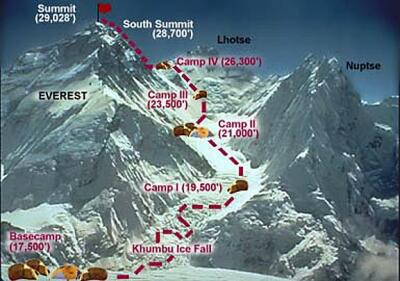
Having reached the summit of Mt. Everest five times, Breashears knows what he wants in a team. Surprisingly, he's not necessarily looking for the best climbers. "I look for talented people who believe in their craft, not those who are looking for praise," he said. "The most important quality is selflessness. I knew that no matter what, no one would leave me behind," he joked.

Sharing a common goal and vision is critical, and no one's ego can take precedence. "People who say 'me first' can be dangerous on Everest." Indeed, in Breashears' experience, the teams that operate best have a higher objective than themselves. Humility makes a great leader. "The kind of leader I want wakes up and asks, 'What did I do wrong yesterday, and how can I fix it today?' Your team doesn't need to like you, but they have to trust and respect you," he said. "A leader who puts his interests first is a highly demoralizing force."


Breashear makes a number of accurate statements about teams, leadership, and character, but few businesses have the ability to create teams that "have a higher objective than themselves."

Sales, Service, Sports: Ya Gotta Believe


I love the Seattle Mariners.

They are currently one of the hottest teams in baseball because of team leadership (much to my surprise), believing in themselves, and team chemistry (character).

This excerpt, from today's Tacoma News Tribune, is from one of thousands of articles written every year about how professional sports teams succeed.

Whats gotten into the 40-39 Mariners?

Just about everything.

The chemistry is very good on this team, Hernandez said. We are all in this together the pitching, the defense, the offense. We are together, and if one guy doesn't get it done, the next guy picks him up.

We believe in ourselves, we pick each other up and that the history of this month. That why we're winning.


The same is true for frontline sales and customer service teams, yet the majority of them are still going through the motions. The concept of an entire team of top achievers-that a team must have in professional sports-gets lost in the various forms of the 80/20 Rule that justifies the lack of teams comprised of achievers. Justifies failure to create a unified team focused on being among the best of the best. if not the best!